
Not all squats are created equal.
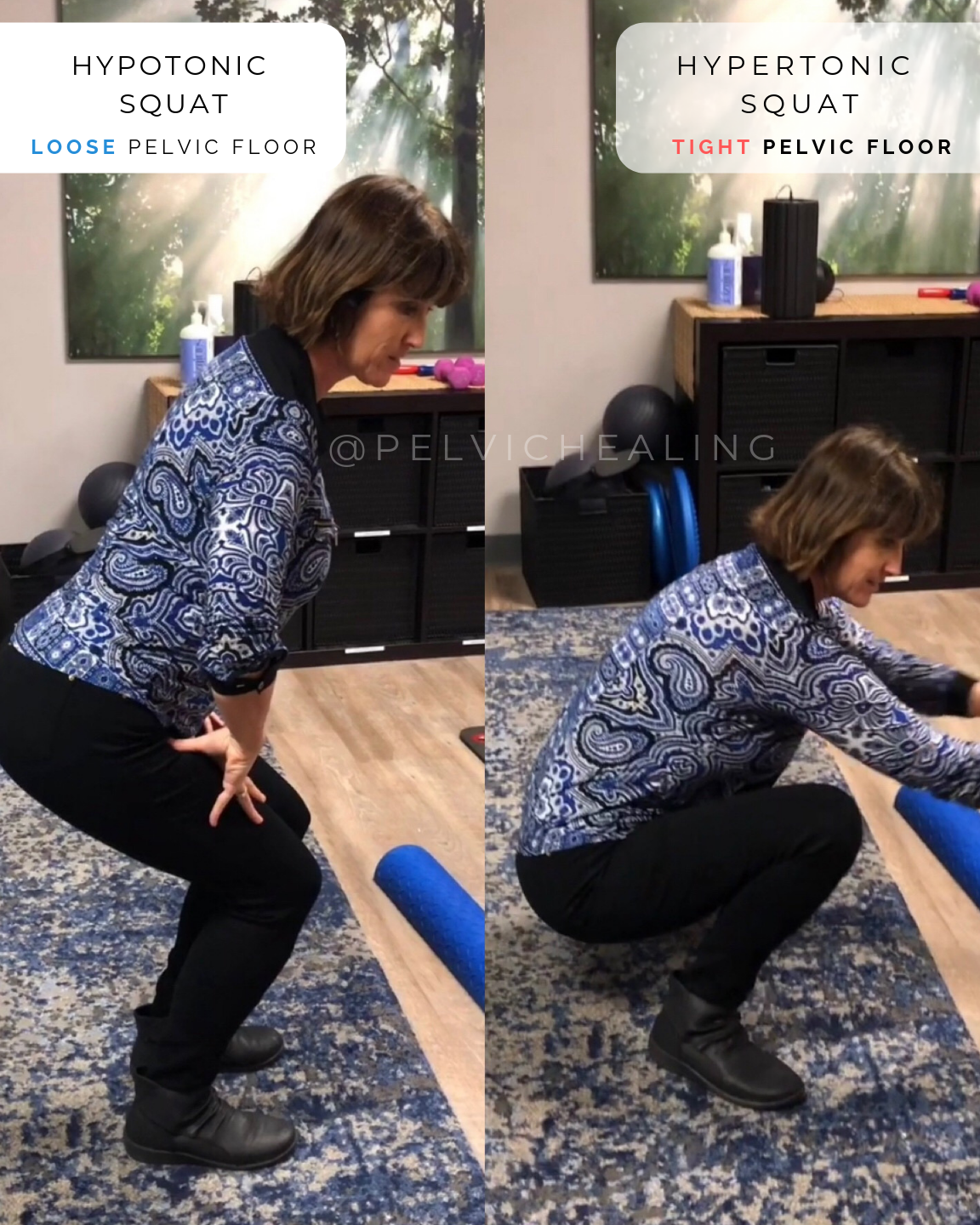
When treating a hypertonic (tight) pelvic floor (for those suffering from pelvic pain), then then be cautious with static partial squats (see left side of image above), and holding for a long period of time. This type of squat will actually shorten and activate the pelvic floor, which is what we want for those with diagnoses that characterize a weak pelvic floor (i.e. prolapse).
So, to combat a weaker (hypotonic) pelvic floor, do a partial squat (left) and hold. To help a tighter (hypertonic) pelvic floor, go for a widened deep squat all the way down to lengthen the muscles and separate the sitting bones (also known as the ischial tuberosities) (right image) and integrate diaphragmatic breathing in this position. Happy squatting!
Please note:
The take home message here is that your pelvic floor reacts differently in these 2 squat positions. The pelvic floor muscles are in a more shortened position and firing with a partial squat versus being elongated and released in a full passive squat, demonstrating the important relationship between pelvic floor and movement.
We teach dynamic partial squats to our pain patients once their pelvic floor muscle tone has normalized, as squatting is such a functional activity. In the early days of treatment, when pain levels and muscle tone are very high, doing a static squat and holding for a long period of time can easily over-facilitate the pelvic floor muscles by shortening and contracting them even further. In turn, this can then dial up pain if the muscles are a pain generator with whatever pelvic pain syndrome they are facing (whether pudendal neuralgia, IC, vestibulodynia, etc.).
Clinically, we often see this when patients hover over the toilet to urinate and their stream is much weaker. Again, we eventually progress them to move in and out of a squat position but we feel the timing and sequencing of this is very important and dependent on muscle tone of the pelvic floor.
Learn more about Here’s What We Know About Total Body Balancing
We want to encourage you to get evaluated by one of our outstanding physical therapists, and regain control of your life. Pelvic pain, pelvic floor dysfunction, back pain, tailbone pain—you name it—these conditions do not have to control your life. There is hope.