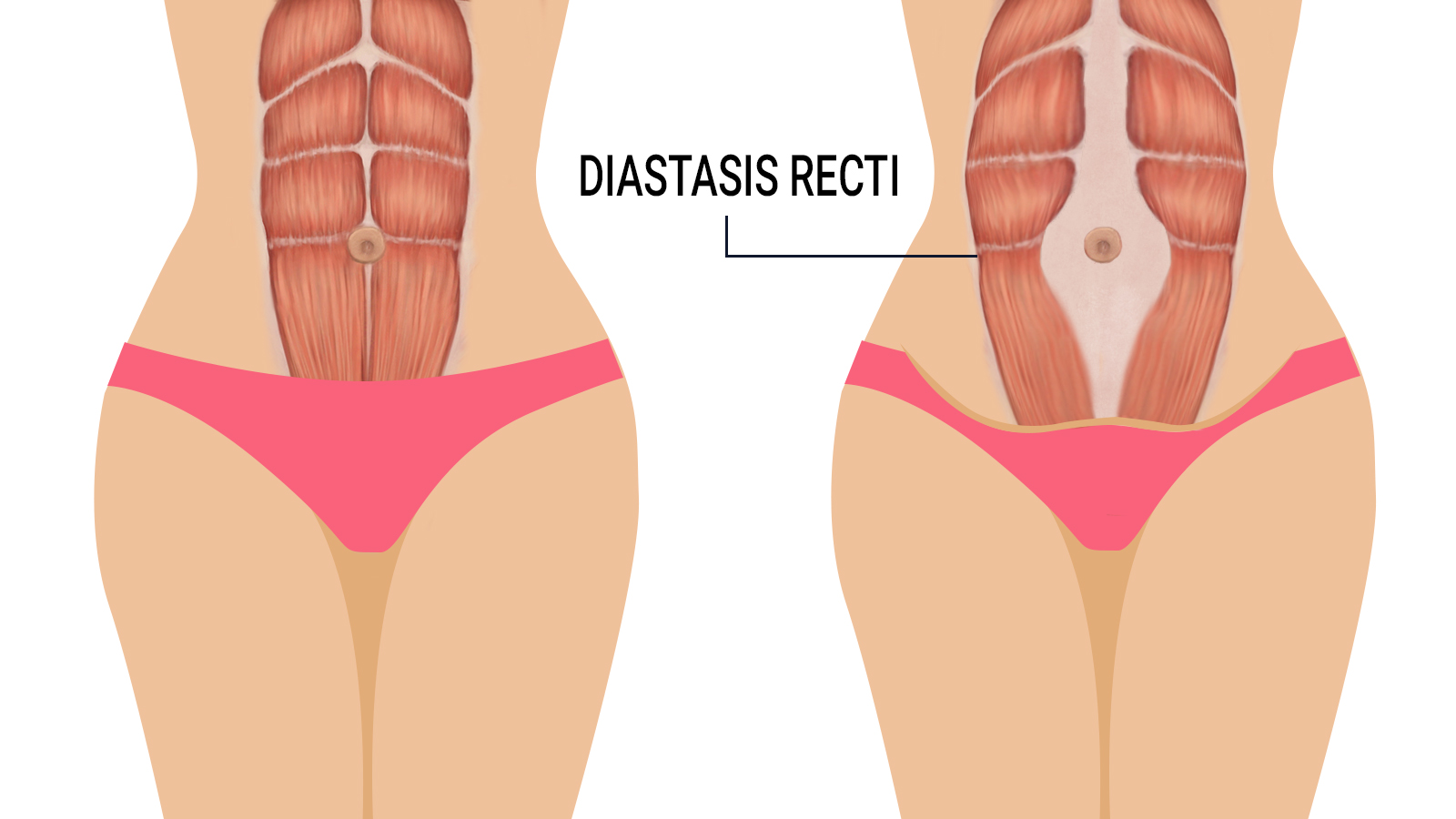
With pregnancy comes a number of bodily adaptations—including those which are emotional, mental, chemical, and of course, physical. Executing the incredible miracle of growing, nurturing, and delivering a human being takes a toll on the uterus and surrounding anatomy. So what is this Diastasis Rectus Abdominis (also known as DRA and Diastasis Recti)? Can it be prevented? How is treated? When should pregnant women and new mothers start treatment?
‘Diastasis’ means separation and ‘recti’ refers to your ab muscles, or the rectus abdominis. Therefore, diastatis recti refers to just that: the separation of your ab muscles.
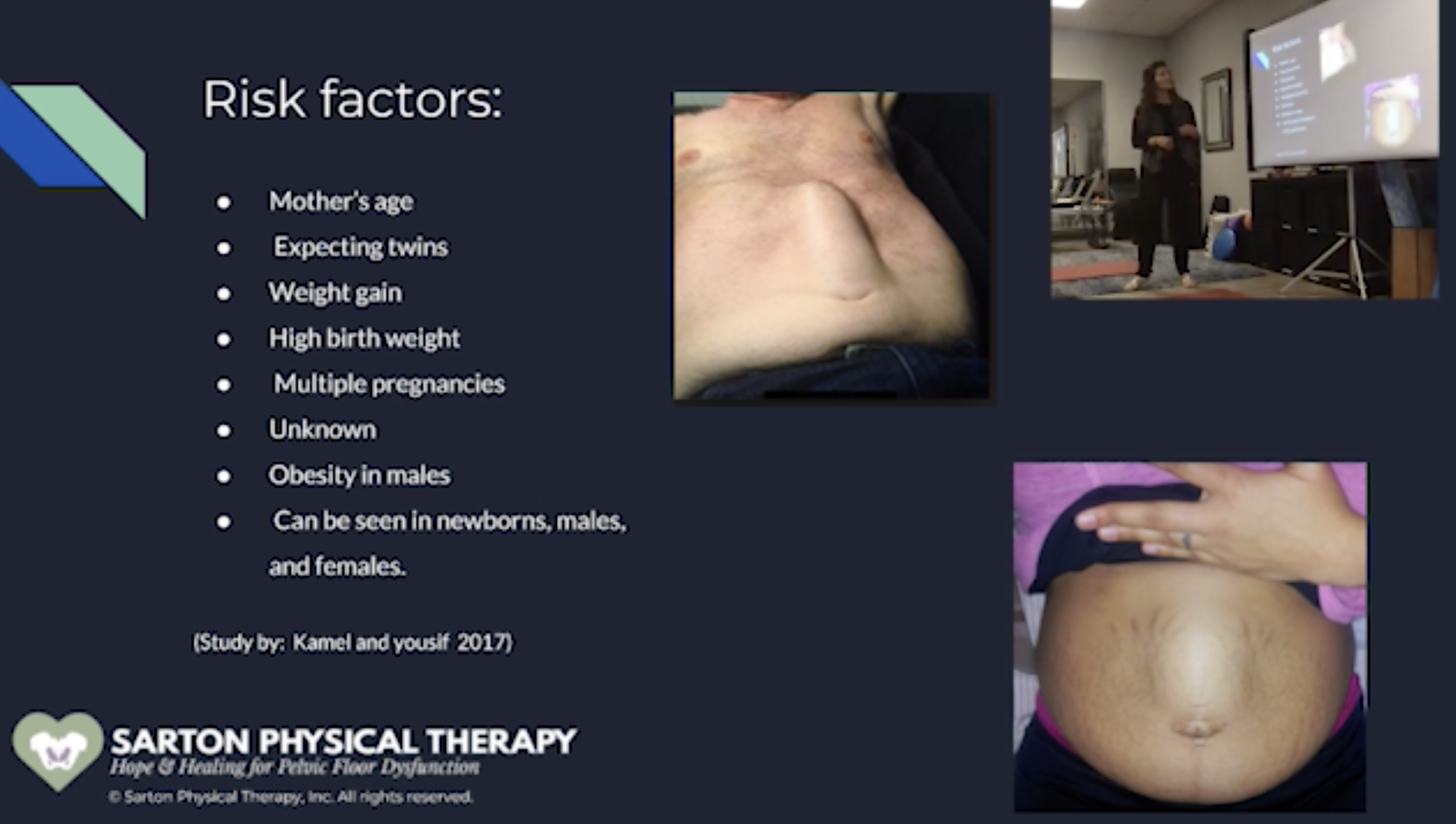
At 35 weeks, 100% of women have Diastasis Rectus Abdominis (DRA), which might cause a bulge in the middle of the abdomen where the two muscles separate. Diastasis recti essentially means that your belly protrudes outward because the space between your left and right belly muscles has widened. You might have heard it referred to as a ‘pooch’ or ‘mommy tummy.’ Most women don’t realize DRA can be treated during and after pregnancy—function can be restored!
Please note, though, that DRA is not only found in women! Dr. Kelly Alhooie addresses this misconception in her presentation, along with addressing the following questions:
-
Why and when does it occur?
-
How can it be treated?
-
Exercises to treat DRA
-
How to check for DRA
This presentation about Diastasis Rectus Abdominis (DRA) includes the latest research by Diane Lee & Paul Hodges 2017 and Dalia Kamel & Amel Yousif 2017.