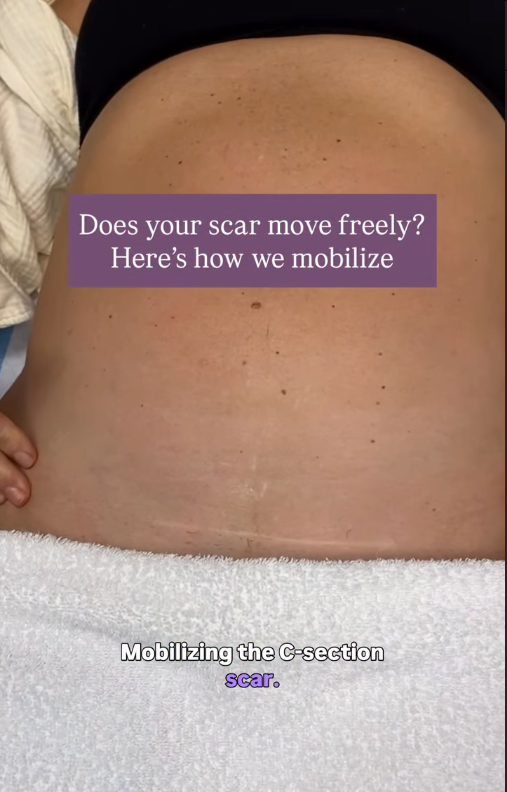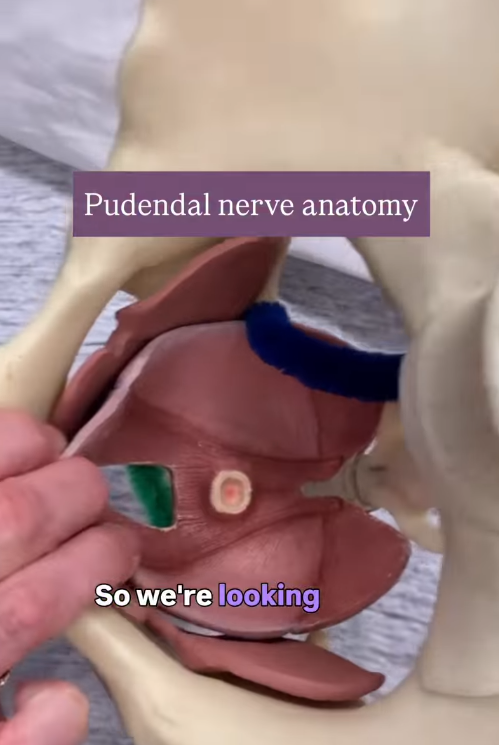
View this post on Instagram
A post shared by Dr. Julie Sarton & The Pelvic Healing Team (@pelvichealing)
What Is Skin Rolling?
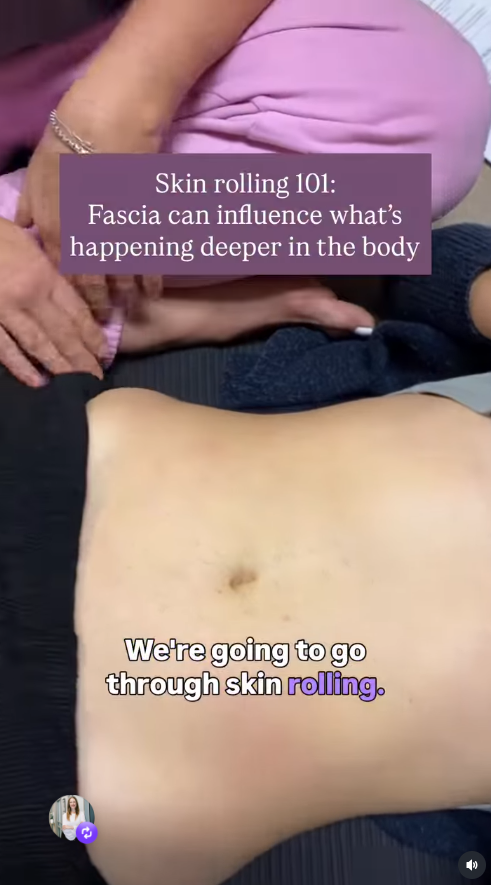
Skin rolling is a form of connective tissue mobilization.
During the technique, a physical therapist gently lifts and rolls the skin and superficial connective tissue between their hands. The goal is to assess how easily the tissue moves and identify areas that feel different from the surrounding tissue.
Your physical therapist may notice areas that feel:
- Thick or dense
- Grainy or irregular
- Restricted or “glued down”
- Less mobile than neighboring tissue
- Sensitive or painful with pressure
These findings can help guide treatment toward areas where tissue mobility may be limited.
What Is Fascia?
Fascia is connective tissue that surrounds and connects structures throughout your body.
Rather than thinking about muscles, nerves, joints, and organs as completely isolated structures, fascia is part of the connective tissue system that helps support and organize them.
The superficial fascia sits beneath the skin and above deeper muscular layers. Because this tissue can move relative to the structures beneath it, assessing its mobility can provide useful information during a physical therapy evaluation.
What Does Skin Rolling Have to Do With the Nervous System?
One reason connective tissue techniques are interesting is that the skin, fascia, muscles, nervous system, and internal organs do not function entirely independently of one another.
Clinicians sometimes discuss these relationships in terms of somatovisceral and viscerosomatic reflexes—neural interactions through which activity involving the body’s musculoskeletal tissues and internal organs may influence one another.
This is one reason a comprehensive physical therapy approach may evaluate tissues outside the exact location where you’re experiencing symptoms.
However, finding an area of restricted or sensitive fascia does not by itself identify an underlying organ problem or diagnose a medical condition.
What Does Restricted Fascia Feel Like?
During skin rolling, healthy mobile tissue typically moves relatively easily between the therapist’s hands.
Other areas may feel more resistant.
Patients sometimes describe these areas as:
- Lumpy
- Gritty
- Grainy
- Tight
- Tender
- Stuck
The important finding isn’t necessarily one particular texture. Your physical therapist is comparing how the tissue moves and feels from one area to another while considering your symptoms and the rest of the physical examination.
An area that feels uncomfortable shouldn’t automatically be avoided. Depending on the individual, a therapist may determine that gentle connective tissue mobilization in that region is appropriate.
Treatment should always remain within a tolerable range rather than simply trying to create pain.
How Is Skin Rolling Performed?
One advantage of skin rolling is that tissues can be assessed from several directions.
A physical therapist may mobilize the tissue:
- Horizontally
- Vertically
- Diagonally
- Across different regions of the body
Changing directions allows the therapist to assess whether the tissue moves differently along different planes.
The technique can also be adapted to many areas of the body rather than being limited to the pelvis.
Why Is Connective Tissue Mobilization Used in Pelvic Floor Physical Therapy?
Pelvic floor dysfunction doesn’t necessarily involve only the pelvic floor muscles.
Depending on your symptoms, a pelvic floor physical therapist may evaluate the abdominal wall, hips, back, pelvis, scars, breathing mechanics, nerves, and surrounding connective tissue.
Skin rolling and other forms of connective tissue mobilization may be incorporated when restrictions or sensitivity in superficial tissues appear relevant to the patient’s presentation.
The technique is therefore one tool within a much larger evaluation and treatment strategy—not a standalone treatment for every pelvic floor condition.
The Bottom Line
Skin rolling is a manual therapy technique used to assess and mobilize the superficial fascia.
By gently moving the skin and connective tissue in different directions, a physical therapist can identify areas of reduced mobility or sensitivity and determine whether those tissues should be addressed as part of treatment.
For people experiencing pelvic pain or pelvic floor dysfunction, this whole-body approach can be particularly useful because symptoms may involve interactions among muscles, nerves, connective tissue, movement, and the nervous system.
If you’re dealing with persistent pelvic symptoms, a pelvic floor physical therapy evaluation can help identify which structures are contributing to your individual symptoms and determine which treatment techniques are appropriate for you.