
Finding hope after years of unanswered pain, healing from pudendal neuralgia is possible.
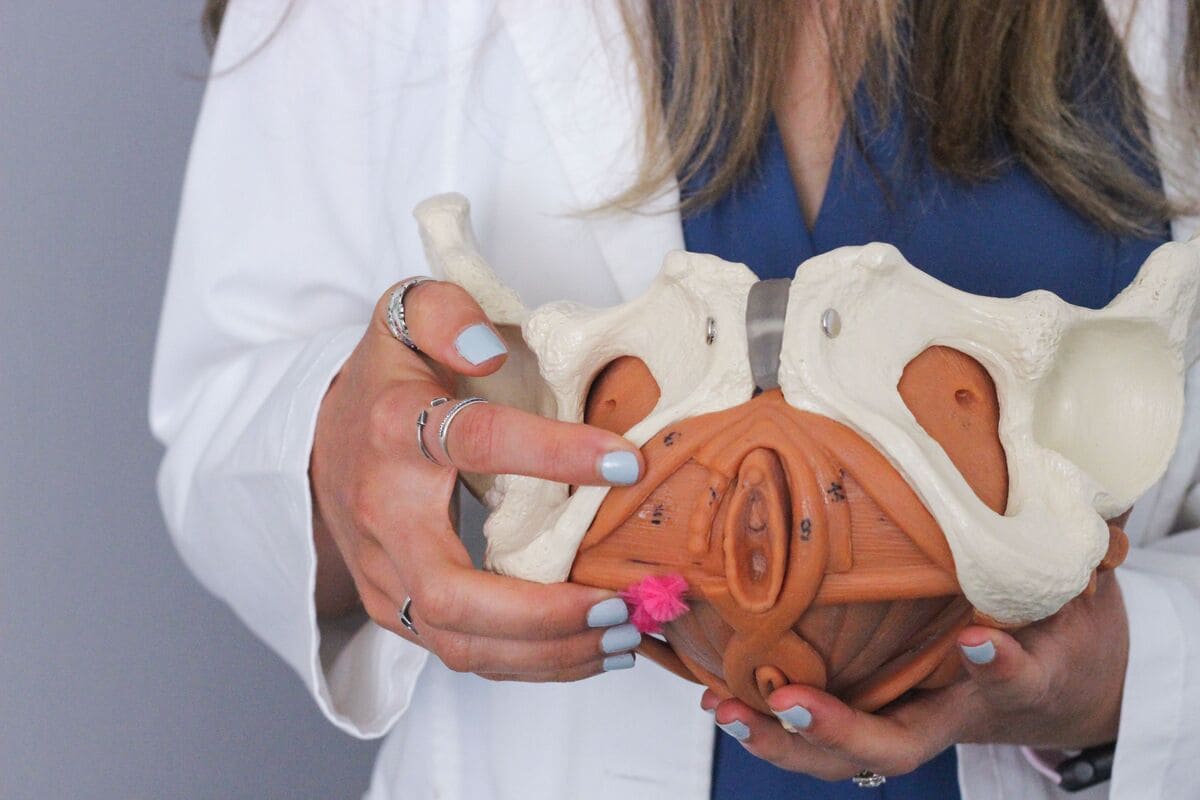
Pudendal neuralgia is a chronic pain condition caused by irritation, compression, or entrapment of the pudendal nerve—a major nerve that runs from the lower spine through the gluteal muscles and pelvic floor, supplying sensation and motor control to the perineum, anus, vulva, labia, penis, and scrotum.
Because the pudendal nerve has such a wide area of influence, symptoms vary dramatically from person to person. This makes pudendal neuralgia one of the most misunderstood and underdiagnosed pelvic pain conditions. Many patients spend years—sometimes decades—visiting multiple providers, undergoing countless tests, and still leave without answers.
At Sarton Physical Therapy, we understand how isolating and overwhelming that journey can feel. Our team specializes in pudendal neuralgia and patients travel from across the country, and even internationally, to receive care here. You are not alone, and recovery is possible.
Patients with pudendal neuralgia often describe sensations that don’t fit neatly into one category of pain. Common symptoms may include:
Because pudendal neuralgia presents so differently in each individual, patients often feel misunderstood by medical providers—or worse, dismissed. Recognizing the unique expression of your symptoms is the first step toward true healing.
The pudendal nerve can become irritated or compressed for a variety of reasons. Common causes and contributing factors include:
Historically, pudendal neuralgia was often referred to as “cyclist’s syndrome,” because early recognition of the condition came from men in the cycling community who developed severe perineal pain from long hours in the saddle. Today, we know that pudendal neuralgia can affect anyone—men, women, and people across all ages and activity levels.
Pudendal neuralgia is often missed in traditional medical evaluations, which is why a comprehensive pelvic floor physical therapy assessment is essential. At Sarton Physical Therapy, our evaluation looks at the whole picture — because the pudendal nerve doesn’t exist in isolation, and neither do you.
Our process includes:
Our goal is to identify not only where the nerve is irritated, but also why. By addressing both the mechanical and neurological contributors — and working in partnership with your pelvic pain physician – we create a plan that moves you toward lasting relief rather than temporary symptom control.
Healing from pudendal neuralgia requires more than simply managing pain—it requires a comprehensive, individualized approach that addresses the nerve, the muscles, and the whole body. At Sarton Physical Therapy, we specialize in treating both male and female patients with pudendal neuralgia, recognizing that while the anatomy may differ, the experience of chronic nerve pain is equally life-altering.
Many of our patients come to us after years of being told “nothing is wrong” or that the pain is “in their head.” Others have tried nerve blocks, medications, or surgeries without lasting relief. What makes our approach different is that we do not just chase symptoms—we focus on uncovering the underlying drivers of nerve irritation and restoring healthy pelvic function.
The pudendal nerve runs directly through and beneath the pelvic floor muscles. When those muscles become too tight, imbalanced, or restricted by scar tissue, they can compress or irritate the nerve. Conversely, weakness or poor coordination of the pelvic floor can leave the nerve unsupported and vulnerable to chronic strain.
Physical therapists specializing in pelvic pain within pelvic health are uniquely qualified to evaluate and treat these dysfunctions. Without pelvic floor physical therapy, many patients find that medications or procedures only provide temporary relief—because the underlying mechanical and muscular contributors are left unaddressed.
Every pudendal neuralgia patient is different. Some experience constant burning pain, while others only feel pain when sitting. Some develop symptoms after childbirth or surgery, while others trace it to cycling or sports. For many, the cause is not obvious at all.
No matter where you are in your journey, our team’s mission is the same: to provide compassionate, evidence-based care that restores function, reduces pain, and gives you back your quality of life.
You may feel helpless now, especially if your story on forums or blogs mirrors others who are still searching for answers. But we want you to know this: healing from pudendal neuralgia is possible. We have seen it happen again and again—and it can happen for you too.
In June 2014 I was suffering from the most horrendous pain I ever had, and believe me I have been through pain most of my adult life. I had back pain surgery and shoulder surgery. I was referred by a friend to Sarton PT. Julie, the owner, personally took control of my situation and diagnosed a severe compression of my pudendal nerve on the right side.
I can not express in words how thankful I am to Julie Sarton and her team.
My pain was so severe that at times I really wished I would be dead. I have read stories of people never recovering from the pudendal nerve inflammation. After a few months I was feeling like a new person, all thanks to the professionalism, knowledge and care of Sarton’s team.
Now, I am 100% pain free!!!! Thank God who put me on their path!!
I absolutely and highly recommend Sarton PT. They are magnificent and Julie is so well known that people from other states fly there to see her and her team.
God bless you Julie, you literally saved my life, and I say it with tears in my eyes as I type this long overdue review!!!
“Julie Sarton and her team have saved my life… more than once. When I first discovered them I was suffering from Pudendal Neuralgia and had been to many doctors. Julie helped diagnose me, and after seeing her for a period my pain went away completely—something I had not thought possible.”
“I was able to have children, which doctors had said was not possible. I recovered so well I was able to play volleyball again and resume work full time, with kids. Healing from PN gave me my life back.”
“With physical therapy, and serious commitment to healing on both our parts, I was able to fully recover from PN. Don’t give up, and stay positive. It takes time for your muscles and nerves to heal, but you can do it. You can heal.”
“Fast forward to today — I am 100% pain-free and discharged from physical therapy. I can successfully sit through meals, meetings and even movies—without a cushion—no symptoms and no pain! It is possible to recover from Pudendal Neuralgia, despite what many say.”
“I HAVE SAT DOWN TO WRITE THIS LETTER MANY A TIMES…
…but how does one thank a clinic and therapists that literally saved your life? On April 24, 2012, my husband and I walked in to Sarton Physical Therapy broken. I was broken physically, but my pelvic floor dysfunction had broken our spirit. I had gone a year untreated and misdiagnosed by doctors, chiropractors, and therapists. I distinctly remember walking in to the clinic, standing during the consultation and pacing the room as we discussed what I was going through. It was the first time I was really heard, felt understood, and diagnosed.
After a thorough investigation, my PT confirmed what I feared the most. I likely had Pudendal Neuralgia. I couldn’t sit without pain, any physical activity spasmed my pelvic floor, and I had nervy sensations all throughout my female parts. I felt like I was sitting on a golf ball almost all of the time. The sensations started the moment I opened my eyes and remained until the moment I went to bed. It not only was uncomfortable, it messed with me emotionally. I can remember asking her, “Can I get better?”. She answered, “Yes”. And although I didn’t really believe her at the time, we sprung into action.
Sarton PT navigated my entire healing journey. They got me to the correct Pain Management Doctor (Dr. Frank King), who prescribed medications to calm the nervous system and muscle relaxers for the pelvic floor. They advised me to see Dr. Michael Hibner in Arizona, at that time mostly just to set my heart at ease that we were on the right track. Lastly, we began extensive pelvic floor physical therapy. I drove to Tustin, one hour away from my home, three times a week at its peak for therapy. I didn’t miss an appointment and I followed their advice to a t. It was a full time job. Each time I went, I felt a tiny bit better. I did not see dramatic changes for a long time. In fact, the recovery has been more like a roller coaster. Ups and downs for which I have learned to weather with ease rather than ramp up my emotions and nervous system which likely would cause more pain.
One might ask, “How did this happen?”. At this point, it’s all conjecture. I am a 34 year old female, former triathlete, competitive swimmer, mother of two, and teacher. We believe that my body was probably brewing this perfect storm for some time. I had history of Iliotibial Band problems from running, sacroiliac joint dysfunction likely inherited from my mother, and a long labor with my large headed son. Bam. There you have it.
The good news, though, two years later after countless hours of physical therapy, hours in the gym retraining my core muscles and ridding my body of compensatory measures, and at home treatments, I am 90% recovered. If you go online, read about Pudendal Neuralgia, no one gets better. The doctors at Sarton PT instructed me to get off the forums, blogs, and facebook pages. They were not helping in any way, in fact they would breed anxiety and fear. But, I am living breathing proof that you can recover from Pudendal Neuralgia.
Today, I went to the gym, cared for my children, took care of my home, and lived a normal life. I am happy, joyful, and very thankful for her healing hands and the work that Sarton Physical Therapy does.
With the greatest of gratitude,”
You deserve answers and relief from your pelvic pain. Our experienced team is here to guide you in reclaiming your confidence and quality of life.