
By: Dr. Brooke Winder, PT, DPT, OCS
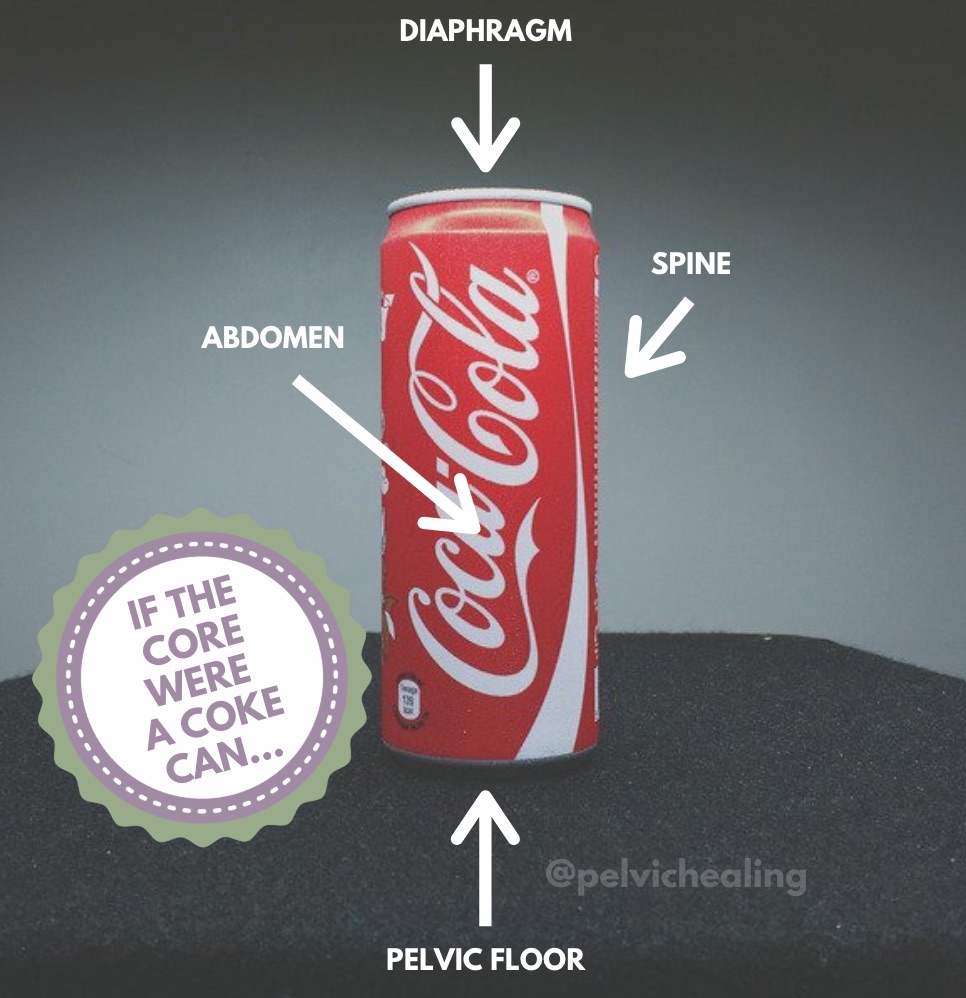
What if we told you that your core was more like a can of coke than a 6-pack of them?
That’s right! When we think of “core” we often think of our abs, but there’s much more to your body’s central trunk than meets that common misconception.
We like to tell patients to imagine their trunk shaped like a can of coke.
The lid of the can is your diaphragm, the front wall of the can is your abdomen, the back wall of the can is your spine, and the bottom of the can is your pelvic floor.
Related article Techniques for Diaphragmatic Breathing
Why is this important?
For one thing, think about your breath! The pelvic floor (bottom of the can) faces upward toward our respiratory diaphragm (lid). Think: parachute of a diaphragm, bowl of a pelvic floor. Ideally, when we take a relaxed breath, we take air in, our diaphragm should flatten (tummies out), the pelvic floor should relax and expand downward simultaneously. Then we exhale, the diaphragm should go back up and the pelvic floor also pulls back up to resting position.
In dancers, for example, who tend to have a pattern of breath holding, if you’re holding breath and you’re not inhaling exhaling as fully as you can, then you’re keeping your diaphragm rigid (breathing into only your chest as opposed to your belly as well). As a result, what your diaphragm is not moving in the way it should and neither is your pelvic floor. That means your pelvic floor might be staying up, shortened as well (say hello to a tight, or hypertonic, pelvic floor)!
To learn more about your pelvic floor, be sure to follow us on Instagram and like us on Facebook!